
Orthodontic Emergencies: Loose Brackets, Broken Wires & After-Hours Care

What Counts as a True Orthodontic Emergency
A genuine orthodontic emergency one that warrants calling our office immediately or seeking after-hours care involves one of the following:
Severe pain or swelling. Mild discomfort after an adjustment is normal. Significant swelling, pain that isn't improving, or any sign of infection around a tooth or the gums needs to be seen promptly.
A wire that has shifted and is poking into the cheek or gum, and cannot be relieved at home. Wires that cause persistent injury to soft tissue need to be clipped or repositioned.
A bracket that has come completely off and been swallowed or is at risk of being swallowed. Brackets are small and pose a minor swallowing hazard, though they're generally not dangerous if swallowed — call us either way.
Trauma to the mouth affecting the teeth or braces. A fall, sports injury, or impact to the face during active orthodontic treatment needs to be evaluated.
What Is NOT a True Emergency (But Still Needs Attention Soon)
These situations are uncomfortable or inconvenient, but don't require emergency care:
- A bracket that has come loose but is still attached to the wire
- A wire that has slid to one side and is poking slightly
- A broken elastic tie or o-ring on a bracket
- General soreness after an adjustment
- A lost rubber band or aligner
These should be handled at your next appointment or at a convenient call-in visit but they don't require you to drop everything.
What to Do: Common Situations and Home Fixes
Loose bracket (still on wire). Leave it in place if possible. Use orthodontic wax to cover it if it's irritating the inside of your cheek. Call our Anderson or Fortville office to schedule a repair appointment that doesn't need to be same-day unless the bracket has fully detached.
Poking wire. Try using a clean pencil eraser or the back of a spoon to gently tuck the wire back against the tooth. If that doesn't work, orthodontic wax placed over the end of the wire provides immediate relief. If the wire is long enough to clip, a clean pair of nail clippers can trim it carefully — but only as a last resort. Call us if the problem persists.
The wire has completely come out. If a wire has come fully out of a bracket or tube, try to reinsert it with clean tweezers if it's within reach. If not, remove it carefully to avoid injury and bring it to your appointment. Use wax on any exposed bracket ends.
Soreness after an adjustment. This is normal and typically resolves within 24 to 72 hours. Over-the-counter pain relief (ibuprofen or acetaminophen) is appropriate. Soft foods for a day or two help significantly.
Lost retainer. Don't wait — teeth begin shifting quickly without a retainer, sometimes within hours. Call us as soon as possible to arrange a replacement. Wearing an old retainer "just for now" is sometimes appropriate, but it should be confirmed with our office first.
Orthodontic Wax: Your Most Useful Tool
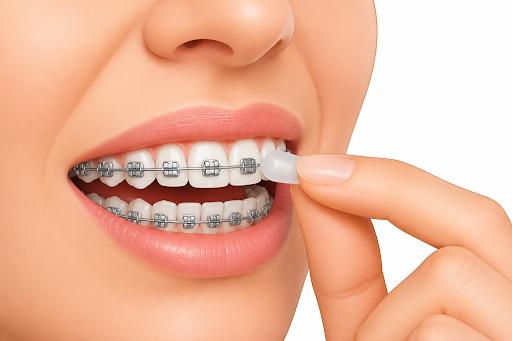
Orthodontic wax is the single most useful item to have on hand throughout treatment. To use it: dry the bracket or wire with a tissue, roll a small ball of wax, and press it firmly over the problem area. It won't fix the underlying issue, but it provides reliable relief until you can come in.
We give every patient wax at their placement appointment — keep it in your bag or backpack at all times.
After-Hours Care
Our Anderson and Fortville offices provide after-hours contact information for genuine emergencies. If you experience significant pain, trauma, or a situation you're genuinely unsure about, call the office line — after-hours instructions will direct you appropriately.
For situations that can wait until the next business day, call us as soon as we open, and we'll work to get you in quickly. We keep appointment slots available for urgent repairs.
What to Do at School or Work
Orthodontic issues don't always happen at convenient times. If something breaks at school:
- Use wax from the kit in your bag
- Avoid touching or playing with loose brackets
- Stick to soft foods for the rest of the day
- Call our office when you have a moment to schedule a repair
If a wire is causing real injury — breaking skin or causing significant pain — a school nurse can sometimes trim the wire with clean scissors as a temporary measure until you can reach our office.
Preventing Orthodontic Emergencies
Most hardware failures happen for one of three reasons: eating foods that shouldn't be eaten with braces, playing contact sports without a mouthguard, or an accidental impact. The most effective prevention:
- Avoid hard, crunchy, and sticky foods throughout active treatment
- Wear a properly fitted sports mouthguard during any contact activity
- Be careful with habits like pen-chewing or nail-biting, which put direct pressure on brackets
A broken bracket doesn't just cause discomfort — it pauses tooth movement on that tooth until it's repaired, which can extend overall treatment time.
Conclusion
Knowing what to do during an orthodontic emergency keeps a minor inconvenience from becoming a major setback. At Bettagere Orthodontics, we're available for urgent calls and keep same-day appointment capacity for situations that genuinely can't wait. Families across Anderson, Fortville, and Pendleton know they can reach us when something goes wrong — and that we'll give them honest guidance on whether it needs to be seen today or can wait until their next visit.
Dealing with a broken bracket or poking wire? Call our Anderson or Fortville office, and we'll get you sorted out quickly.