Surgical Orthodontics: When Braces Aren't Enough

What Is Surgical Orthodontics?
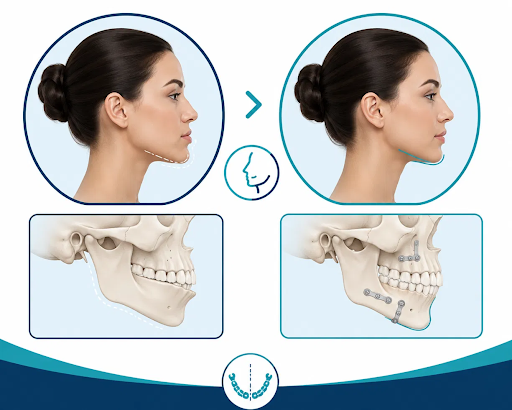
Surgical orthodontics also called orthognathic surgery is a combined treatment approach that pairs orthodontic treatment with jaw surgery to correct skeletal discrepancies that braces alone cannot fix. The key distinction is this: braces move teeth within the jaw. Surgery moves the jaw itself.
When the upper jaw, lower jaw, or both are significantly mispositioned relative to each other and to the rest of the face, no amount of tooth movement will fully correct the bite or the facial profile. In these cases, orthognathic surgery repositions the jaw bones into a more favorable alignment, and orthodontic treatment before and after surgery fine-tunes the teeth within that corrected framework.
Who Needs Surgical Orthodontics?
Not every overbite, underbite, or jaw asymmetry requires surgery. Most bite problems fall within the range that orthodontic treatment alone can address effectively. Surgical orthodontics is typically considered when:
- The jaw discrepancy is skeletal — meaning it's a bone position problem, not just a tooth position problem
- The bite cannot be fully corrected with braces or aligners without compromising the appearance of the teeth
- The patient has finished growing (jaw surgery is not performed on patients whose jaw growth is still active)
- Sleep apnea or significant breathing problems are linked to jaw position
- Facial asymmetry from jaw misalignment is causing functional or significant aesthetic concerns
Common conditions that may lead to a surgical orthodontics recommendation include severe Class III malocclusion (underbite where the lower jaw protrudes significantly), severe Class II malocclusion (overbite where the upper jaw is significantly forward), an open bite that cannot be closed with orthodontics alone, and significant facial asymmetry from uneven jaw growth.
How Surgical Orthodontics Works: The Timeline
Surgical orthodontic treatment typically follows a three-phase process, and understanding the full timeline upfront prevents surprises:
Phase 1 — Pre-surgical orthodontics (12 to 18 months). Before surgery, braces are placed to align and level the teeth within each jaw individually. This phase can feel counterintuitive — the bite often looks and feels worse before surgery than it did at the start, because teeth are being aligned for their post-surgical position rather than their current jaw position. This is normal.
Phase 2 — Jaw surgery. The surgical procedure is performed by an oral and maxillofacial surgeon, not by the orthodontist. Dr. Bettagere works closely with experienced oral surgeons in the Anderson and Fortville area to coordinate care seamlessly between the two disciplines. Surgery is performed in a hospital under general anesthesia, typically as an inpatient procedure with a one to two-night stay.
Phase 3 — Post-surgical orthodontics (6 to 12 months). After a recovery period of several weeks, orthodontic treatment resumes to finalize tooth positions within the newly corrected jaw framework. This phase is typically shorter than pre-surgical orthodontics.
Recovery from Jaw Surgery
Recovery from orthognathic surgery is real — patients should plan for it. Most patients take two to four weeks off from work or school. Swelling peaks in the first few days and gradually resolves over several weeks to months, with final results typically visible at six months to a year post-surgery. The diet is initially limited to soft foods, with a gradual progression as healing allows.
The discomfort is manageable for most patients with prescribed pain management in the immediate post-operative period. What patients more commonly describe as the hardest part is the patience required — it takes time to see the final result, and the swelling phase can be discouraging before the outcome becomes visible.
Cost and Insurance for Surgical Orthodontics
Surgical orthodontics involves two separate costs: orthodontic treatment and the surgical procedure itself. The orthodontic portion is priced similarly to comprehensive braces treatment. The surgical portion — including surgeon fees, anesthesia, and hospital facility costs — is typically covered in part by medical insurance rather than dental insurance, since orthognathic surgery is classified as medically necessary for qualifying patients.
This distinction matters: patients with both dental and medical insurance coverage often find that surgical orthodontics is more affordable than they initially assumed. We help coordinate the insurance verification process and can refer you to the oral surgeon's office for surgical cost estimates. See our financial information page for more on payment options.
Working with an Oral Surgeon
Surgical orthodontics is a team treatment — the outcome depends on close coordination between the orthodontist and the oral surgeon throughout all three phases. At Bettagere Orthodontics, Dr. Vidya Bettagere maintains working relationships with trusted oral and maxillofacial surgeons in the Central Indiana area, ensuring that communication between providers is clear and that the treatment plan is coordinated from the first appointment through final retention.
Conclusion
Surgical orthodontics jaw surgery, is not the right path for most patients — but for those with significant skeletal jaw discrepancies, it's often the only path to a fully functional bite and a balanced facial profile. At Bettagere Orthodontics, Dr. Vidya Bettagere, DDS, MSD, has the training and referral network to guide patients through the full surgical orthodontics process, from initial diagnosis through post-surgical retention. Patients across Anderson, Fortville, and Pendleton trust us to give them an honest assessment of whether surgery is genuinely indicated — and what the process looks like if it is.